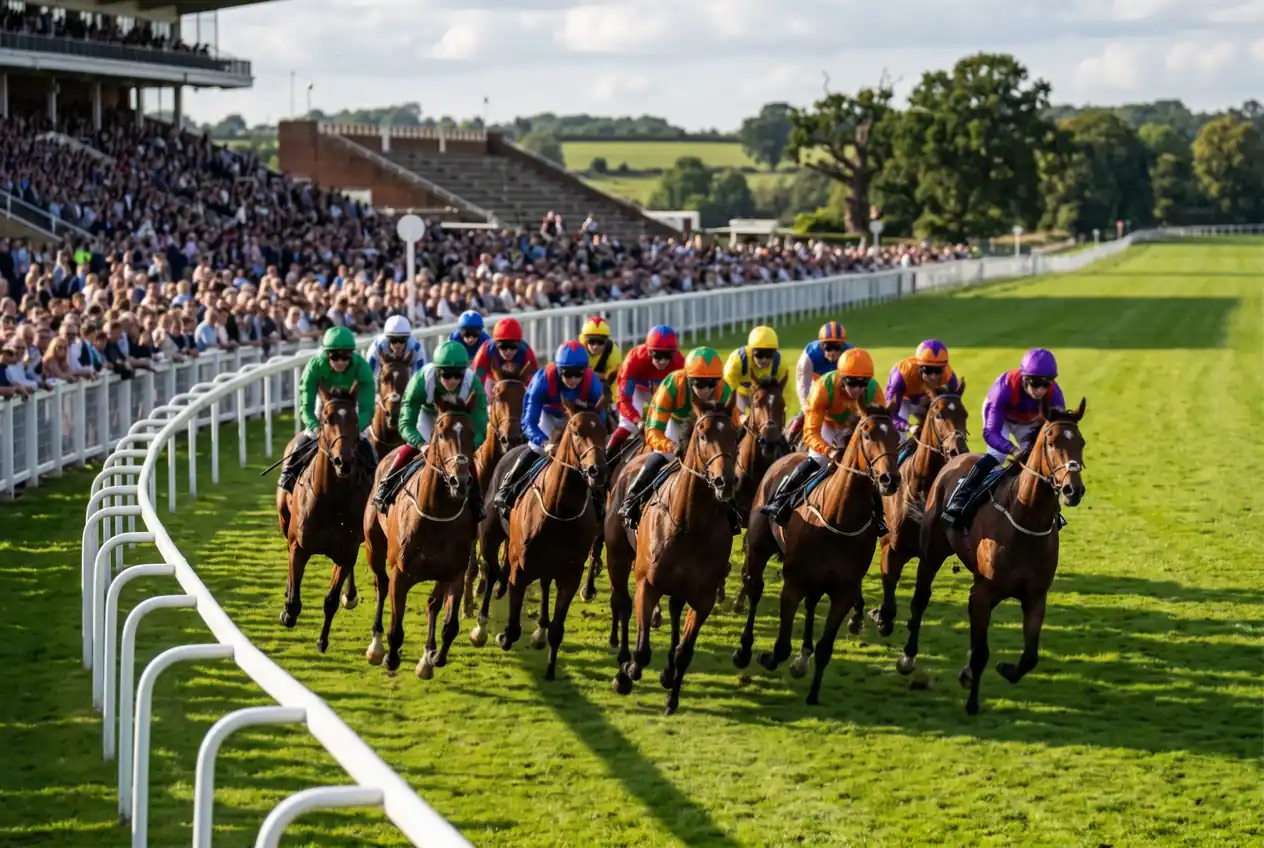
Tips for Horse Racing Betting: A Data-Driven Guide to Smarter Punting
Best Horse Racing Betting Sites – Bet on Horse Racing in 2026
 Available in US
Table of Contents
- Why Most Punters Lose — and What the Data Says You Should Do Instead
- Five Principles That Separate Profitable Punters from the Crowd
- The UK Horse Racing Betting Landscape in Numbers
- Bet Types Every Punter Should Know
- How Fractional Odds and Overround Shape Your Returns
- Reading Form: The Single Most Important Skill in Horse Racing Betting
- Spotting Value: Why Odds Alone Are Not Enough
- Building a Betting Strategy That Survives Contact with Reality
- What Every UK Punter Needs to Know About Affordability Checks
- Seven Quick Wins: Instant Improvements to Your Betting Process
- Frequently Asked Questions
Why Most Punters Lose — and What the Data Says You Should Do Instead
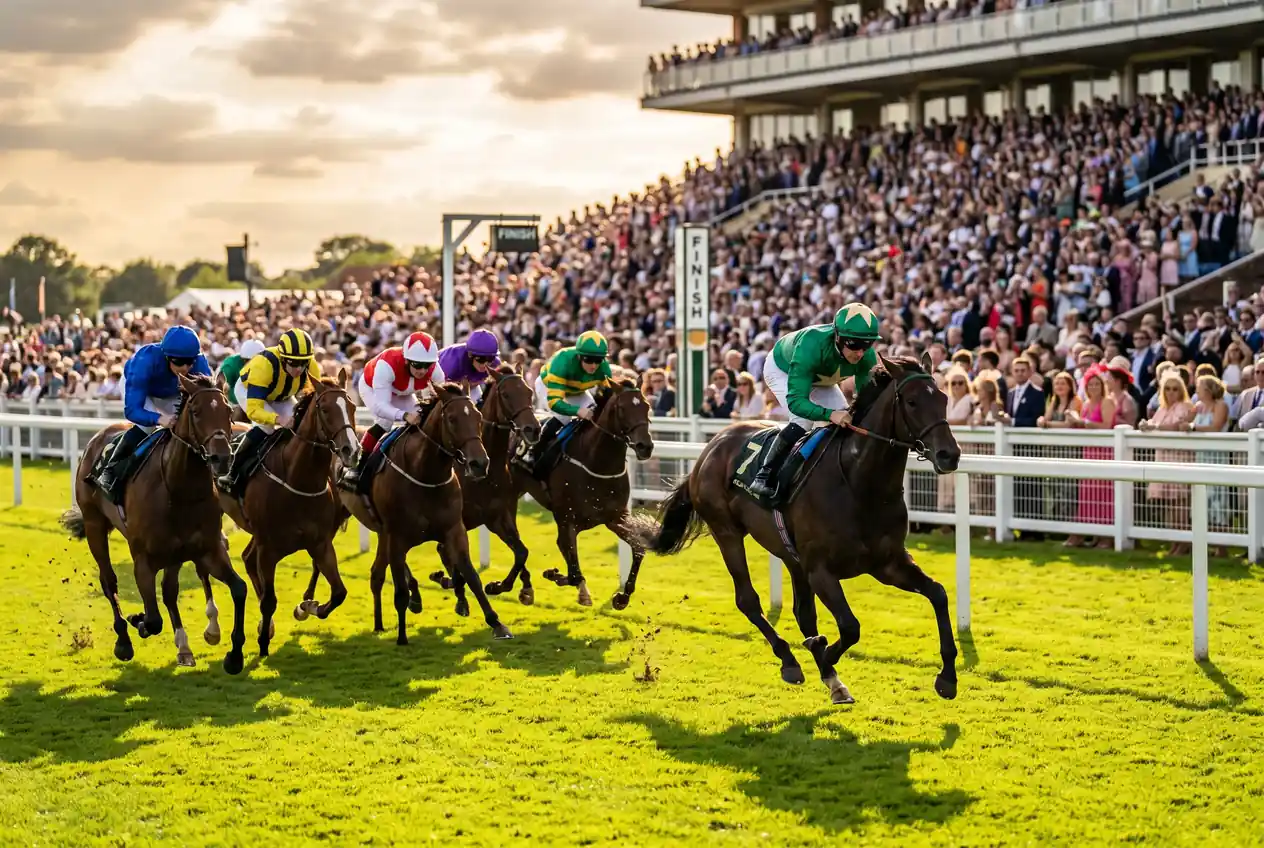
I still remember the afternoon that changed everything about how I approach the turf. It was a midweek meeting at Haydock, nothing glamorous, and I had backed four consecutive favourites because “they couldn’t all lose.” Three of them did. The fourth drifted from 6/4 to 5/2 and scraped home by a neck — but I had already mentally spent the winnings from the first three. I drove home that evening with a lighter wallet and a question I couldn’t shake: if favourites are supposed to win a third of the time, why does backing them blindly feel like slow financial suffocation?
The answer, once I found it, was brutal in its simplicity. Favourites in British racing do win roughly 30–35% of the time across flat and National Hunt combined, but the return on investment from systematically backing every favourite sits at around minus seven percent. That means for every hundred pounds you feed into the market on favourites alone, you get ninety-three back. It is not a strategy — it is a subscription to a small, steady loss.
Systematic backing of favourites produces a return on investment of approximately 93p for every £1 staked — a net loss of around 7% over time.
This guide exists because I spent nine years learning the hard way what data could have told me on day one. Horse racing betting in the UK is deeply interlinked with the gambling sector itself — the fixture lists and race programmes are shaped by the need to provide a consistent betting product, a reality that the DCMS Select Committee itself has acknowledged. That symbiosis means the information you need to bet smarter is embedded in the sport’s own structure, hiding in plain sight in form strings, sectional times, going reports and market movements. You just need to know where to look and, more importantly, what to ignore.
Over the next several thousand words, I am going to walk you through the framework I use every race day. We will cover the UK betting landscape in hard numbers, break down the bet types that matter, decode fractional odds and overround, dissect form reading, explore value identification, build a staking strategy, and tackle the regulatory shifts — particularly affordability checks — reshaping how British punters operate in 2026. Every claim will be backed by data, and I will be honest about the things I got wrong.
Before we dig into the mechanics, here is a snapshot of the principles that underpin everything that follows.
Five Principles That Separate Profitable Punters from the Crowd
- Backing every favourite returns roughly 93p per £1 staked — the market’s built-in edge means you need a selection process, not just an opinion.
- UK horse racing generates £766.7 million in remote gross gaming yield annually, yet total turnover dropped 12.8% between 2023 and 2025 — the landscape is shifting, and informed punters can exploit the gaps casual money leaves behind.
- Value exists where your assessed probability exceeds the implied probability of the odds — learn to calculate expected value before every bet.
- Flat staking at 1–2% of bankroll per bet protects you through losing runs that would destroy aggressive punters.
- Affordability check thresholds now sit at £150 per month — understand the rules before they interrupt your betting at the worst possible moment.
The UK Horse Racing Betting Landscape in Numbers
A few years ago, I tried explaining to a friend outside the sport why I spend hours each week studying racecards. His response: “It’s just gambling, isn’t it?” I pulled up the numbers, and by the time I had finished, he looked at me the way people look at someone who just told them the local corner shop turns over half a billion pounds a year. Because that is roughly the scale we are talking about — except it is much bigger.
The UK horse and sports betting market is valued at £3.7 billion in 2026, with 499 licensed operators competing for punters’ money. Horse racing alone — just the remote online segment — generated £766.7 million in gross gaming yield between April 2024 and March 2025. To put that figure in context, total remote betting GGY across all sports hit £2.6 billion for the same period, meaning racing accounts for nearly a third of the entire remote betting economy. This is not a niche hobby. It is a pillar of the UK’s leisure economy.
Remote horse racing GGY: £766.7 million (April 2024–March 2025) — nearly a third of the UK’s total remote betting gross gaming yield.
Horse racing is the second-largest spectator sport in Britain after football, with 4.8 million racegoers in 2022 and attendance up 4.9% through 2025.
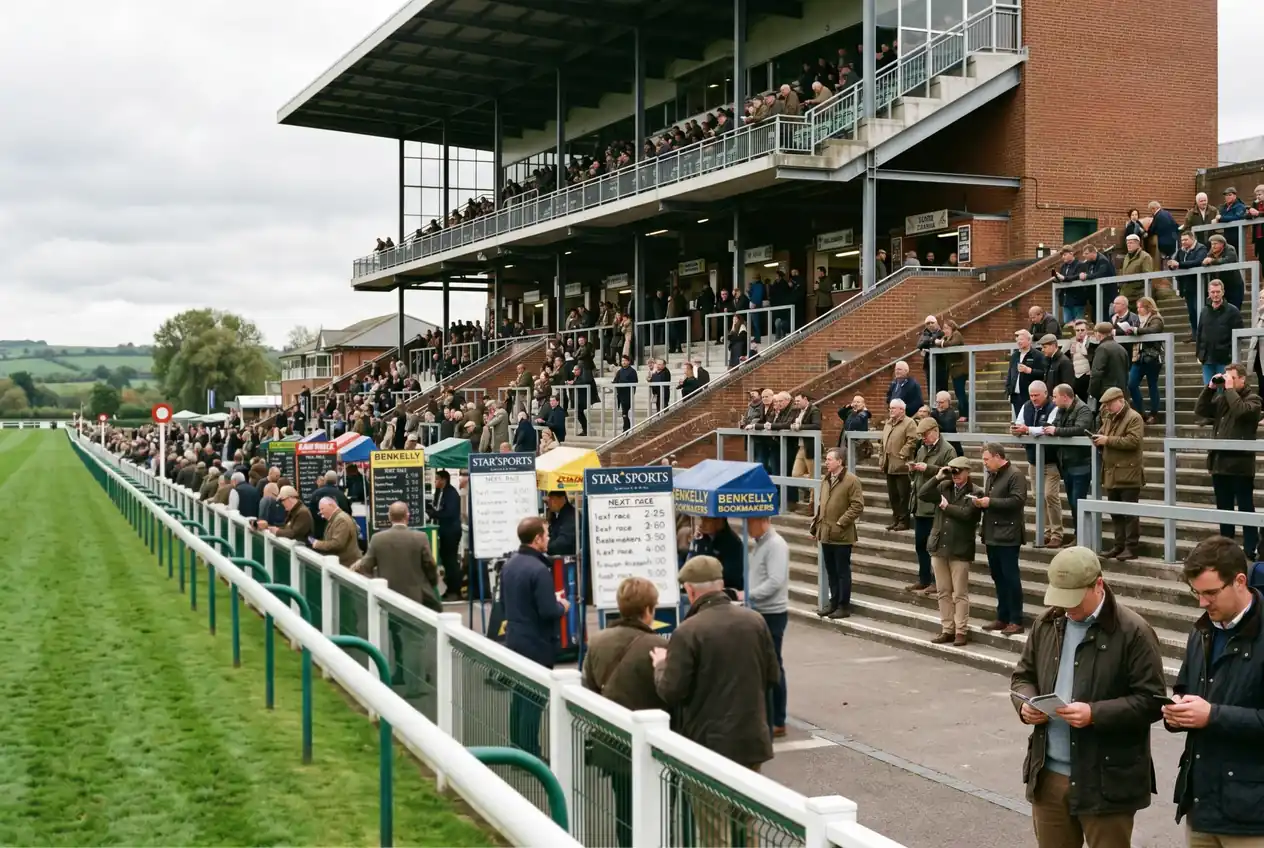
The broader industry contribution is staggering. British racing’s direct revenues exceed £1.47 billion, and when you include the induced effects — the hotels near Cheltenham, the hospitality at Ascot, the transport, the feed suppliers, the veterinary sector — the total annual contribution to the UK economy reaches £4.1 billion. The industry supports around 85,000 jobs, with more than 20,000 of those directly on the 59 licensed racecourses scattered across the country.
But there are cracks in the surface. Total betting turnover on British racing dropped 9% in the first quarter of 2025 compared with the previous year, and the longer trend is worse — a 12.8% decline over the first nine months of 2025 versus the same period in 2023. Participation in horse racing betting swings seasonally between 4% and 7% of the adult population, peaking around the spring festival season and dropping through the autumn. The Horserace Betting Levy Board collected a record £109 million from bookmakers in 2024–25, the highest since the levy reform in 2017, but that figure masks underlying turbulence in turnover and punter numbers.
Market Size
£3.7 billion (UK horse and sports betting, 2026)
Remote Racing GGY
£766.7 million (2024–25)
Turnover Trend
Down 12.8% over 9 months (2025 vs 2023)
Seasonal Participation
4%–7% of UK adults, depending on the calendar
Why does any of this matter to you as a punter? A shrinking pool of casual money and a growing regulatory squeeze mean the market is getting sharper. The recreational punters who used to throw £20 at the Grand National and never think about it again are betting less frequently. If you are reading this guide, you are already signalling that you want to be on the informed side of that divide.
Bet Types Every Punter Should Know
The first time I walked into a betting shop — properly walked in, not just to collect a losing slip — I stared at the board and realised I did not actually understand half the bet types on offer. I knew “win” and I had a vague sense that “each-way” meant you got something back if your horse placed. Beyond that, it was alphabet soup: Trifecta, Lucky 15, Yankee, Heinz. I placed a win single that day, lost, and told myself I would learn the rest later. “Later” took about two years longer than it should have.
The breakdown of how punters actually stake their money is revealing. Win bets account for 36% of all horse racing wagers, each-way takes 22%, forecast and tricast combinations make up 17%, single bets on other markets represent 15%, and multiple bets — accumulators, Lucky 15s and the rest — account for the remaining 10%. Those numbers tell you something important: the market is dominated by straightforward bets, and the exotic multiples that get the most attention in pub conversations represent the smallest slice of actual turnover.
| Category | Share of Wagers | Complexity | Typical Edge for Punter |
|---|---|---|---|
| Win Bets | 36% | Low | Highest (single margin) |
| Each-Way | 22% | Low–Medium | Good (two chances) |
| Forecast / Tricast | 17% | Medium–High | Lower (combined margins) |
| Singles (other markets) | 15% | Low | Varies |
| Multiples (accas, Lucky 15) | 10% | High | Lowest (compounded margins) |
Overround — the bookmaker’s built-in margin across all runners in a race. A “fair” book totals 100%; a typical UK race book runs between 110% and 125%, meaning the house retains 10–25% of the implied probabilities as profit.
Win, Place and Each-Way
A win bet is exactly what it sounds like: you back a horse to finish first, and if it does, you collect. The beauty of the win single is that you are only fighting one layer of bookmaker margin. Every additional leg or complication you add to a bet multiplies that margin against you, which is why experienced punters tend to gravitate back to singles after flirting with exotic bets.
Place betting — backing a horse to finish in the top two, three or four depending on the field size and race type — offers a lower return but a higher probability of collecting. In standard UK rules, a field of five to seven runners pays out on the first two; eight to fifteen runners pays the first three; and sixteen or more, particularly in handicaps, pays the first four. The place fraction is typically one-quarter of the win odds for most races, though it drops to one-fifth for large-field handicaps at the major festivals.
Win Bet Example
Stake: £10 at 5/1
If the horse wins: £50 profit + £10 stake returned = £60 total
If the horse loses: -£10
Each-Way Bet Calculation
Suppose you place £10 each-way on a horse at 8/1 in a 12-runner handicap (1/4 odds, three places).
Total outlay: £20 (£10 win + £10 place).
If the horse wins: Win part pays £80 profit + £10 stake. Place part pays £20 profit (8/1 divided by 4 = 2/1) + £10 stake. Total return: £120. Net profit: £100.
If the horse finishes 2nd or 3rd: Win part loses (-£10). Place part pays £20 + £10 = £30. Net profit: £10.
If the horse finishes 4th or worse: Both parts lose. Net loss: -£20.
Each-way betting shines in big-field handicaps where the place terms are generous and you can identify a horse with strong place credentials even if the win seems unlikely. For a deeper look at when each-way bets deliver genuine mathematical edge, I have written a dedicated breakdown of each-way betting and the scenarios where it outperforms a straight win single.
Accumulators, Lucky 15 and Multiple Bets
Accumulators — accas — are the pub bet, the Friday afternoon flutter, the dream ticket. You string together four, five, six selections and the odds multiply into life-changing territory. The problem, and it is a significant one, is that the bookmaker’s margin also multiplies with every leg. A four-fold accumulator in races where the average overround is 15% does not face a 15% disadvantage; it faces something closer to a 52% cumulative disadvantage because the margins compound. That is why accumulators are the bookmaker’s best friend.
Warning: A four-leg accumulator with a 15% overround per race compounds to approximately 1.15^4 = 1.75 — meaning the true “fair” payout should be 75% higher than what you actually receive. The house edge on multiples is dramatically steeper than on singles.
Lucky 15 bets — fifteen bets across four selections (four singles, six doubles, four trebles and one four-fold) — offer a consolation structure that pays something even if only one horse wins. But the total stake is fifteen times your unit, so a £1 Lucky 15 costs £15, and you need multiple winners to see meaningful profit.
RailBet Bankroll & Value Toolkit
Staking discipline, best-price shopping and favourite-backing value — run the numbers before you run the risk.
I am not going to tell you to never place an accumulator — that would be dishonest, because I still do it occasionally for entertainment. What I will tell you is that accumulators should never form the backbone of a serious betting approach. They are the dessert, not the main course. Your edge, if you have one, lives in singles and carefully chosen each-way bets where you can isolate the value in individual selections.
How Fractional Odds and Overround Shape Your Returns
I once sat next to a man at Newmarket who told me, with absolute confidence, that 5/1 meant his horse had a “twenty percent chance of winning.” He was close — but “close” in betting is the difference between profit and loss over a thousand bets. The implied probability of 5/1 is actually 16.7%, and that gap between what punters think odds mean and what they actually mean is where bookmakers quietly build their fortunes.
Fractional odds are the traditional UK format. The number on the left is the profit you receive relative to the stake on the right. At 5/1, you profit £5 for every £1 staked. At 11/4, you profit £11 for every £4 staked. Converting to implied probability is straightforward: divide the denominator by the sum of both numbers. For 5/1, that is 1 divided by (5+1), which gives 0.167, or 16.7%. For 11/4, it is 4 divided by 15, or 26.7%.
Fractional to Decimal to Implied Probability
Odds: 7/2
Decimal equivalent: (7 / 2) + 1 = 4.50
Implied probability: 1 / 4.50 = 22.2%
Odds: 4/6
Decimal equivalent: (4 / 6) + 1 = 1.667
Implied probability: 1 / 1.667 = 60.0%
Here is where it gets important. The overround is the mechanism through which every bookmaker guarantees a slice of the action regardless of the result. Add up the implied probabilities of every runner in a race: if the total comes to 115%, the bookmaker has built a 15% cushion into the market, extracted directly from punters’ returns.
Overround Calculation
A four-runner race with the following prices:
Horse A: 6/4 — implied probability = 40.0%
Horse B: 3/1 — implied probability = 25.0%
Horse C: 4/1 — implied probability = 20.0%
Horse D: 5/1 — implied probability = 16.7%
Total: 101.7%. The overround is 1.7% — an unusually tight book. In reality, most races with larger fields carry overrounds of 15–25%.
Understanding overround is the first step toward understanding value. Bookmakers shade odds most aggressively on favourites — where public money flows — and offer slightly better value on longer-priced runners. This is why blindly backing short-priced favourites grinds your bankroll, while disciplined selection of mid-priced runners with overlooked form angles can produce a genuine edge. For a full walkthrough, see the detailed guide to how horse racing odds work in UK markets.
Reading Form: The Single Most Important Skill in Horse Racing Betting
There was a Saturday at Doncaster when I watched a 14/1 shot stroll to an easy four-length victory. “Where did that come from?” someone muttered. I checked the form afterwards and the answer was obvious: the horse had won twice at the course and distance, had its ground, was dropping in class, and the trainer’s yard was in flying form. The price was 14/1 because the last run — a distant sixth at Ascot on unsuitable ground — was the only line most casual punters had read.
Favourites win about 30–35% of all races in Britain, but that headline figure disguises enormous variation. In small fields of five or six runners, the favourite wins close to 40% of the time. In big-field handicaps with twelve or more runners, that drops to around 27%. The second favourite wins roughly 20% of the time, and between them, the top three in the market account for 65–70% of all winners. These numbers tell you that the market is efficient — but not perfectly efficient. The 30–35% of races where neither the favourite nor the second favourite wins represent the hunting ground where form readers find their edge.
Reading a UK form string: The numbers represent finishing positions in recent races, read from left to right as most recent first. A “1” means a win, “2” a second place, “0” means the horse finished outside the first nine. Letters carry meaning too: F = fell, U = unseated rider, P = pulled up, C = carried out, R = refused, B = brought down. A dash (-) separates different seasons. The form string “213-05” tells you the horse won its most recent start, finished third before that, and was second two runs back — then there is a seasonal break, followed by a distant fifth and a win the season prior.
Form alone is not enough — the people behind the horse matter enormously. Before I dig into individual form lines, I check whether the connections are operating in their strongest zone: right course type, right class level, right time of year. If a trainer has a 3% strike rate at the course in question, I need an overwhelming reason to back their runner.
Five-Point Form Check Before Every Selection
- Has the horse won or placed at this course and distance (C&D)?
- Does the current going suit the horse’s established preferences?
- Is the horse stepping up, down or staying at the same class level?
- Are the trainer and jockey performing above their baseline strike rate this month?
- Is there a clear reason why the last run should be forgiven or weighted heavily?

Quick Form Assessment
Form string: 31-2142
Read right to left for chronological order: the horse won two starts ago, finished fourth before that, then first, second, followed by a break, then first and third in the prior season.
Recent form (last three runs): 2, 1, 4. Two top-two finishes from three — strong.
Trend: improved second-up this season, won fresh, and dipped when tried at a higher class (the fourth). If today’s race is at a similar or lower class to the last win, this horse profiles as a contender.
The single most important lesson from hundreds of hours of form study: context turns the same result from a positive into a negative. A sixth of twelve in a Group 1 at Ascot on unsuitable ground is vastly better form than a sixth of twelve in a Class 5 at Wolverhampton on a preferred surface. Numbers without context are noise. For the full breakdown of how to decode every element of a UK racecard, head to the complete horse racing form guide.
Going, Draw and Track Conditions at a Glance
The going — the state of the racing surface — is the single most volatile factor in British racing. A horse that demolishes a field on good-to-firm ground can struggle home last on heavy. The UK going scale runs from hard (rare and often avoided) through firm, good-to-firm, good, good-to-soft, soft, and finally heavy. All-weather surfaces — polytrack, fibresand, tapeta — behave differently again, generally favouring horses with tactical speed and consistent form regardless of weather.
| Going | Favours | Key Risk |
|---|---|---|
| Firm / Good-to-Firm | Quick, low-action movers | Injury risk on extremes |
| Good | No strong bias | Low |
| Good-to-Soft / Soft | Stamina-laden, big-striding types | Form reversals common |
| Heavy | Proven mudlarks only | Non-stayers and fast-ground horses stop |
| All-Weather | Tactical speed, consistency | Low — less form variation |
Draw bias — the advantage or disadvantage of a stall position — matters most on tight, turning tracks like Chester, where low draws hold a significant edge over five and six furlongs, and at Beverley, where high draws are favoured over the minimum trip. Always check draw statistics for the specific course and distance before finalising a selection.
I check the going report twice on race day: once in the morning and again about an hour before the first race. Ground can change rapidly after rain, and a rail movement can shift the draw bias completely.
Jockey and Trainer Patterns Worth Tracking
About 80% of races are won by the top 20% of jockeys and trainers at each track — a concentration of talent that mirrors what you see in most competitive fields. The practical implication is that filtering by connections is one of the fastest ways to narrow a field. If a top trainer books a leading jockey for a horse that has been running with a less experienced rider, that booking change alone is a signal worth noting.
Approximately 80% of UK races are won by the top 20% of jockeys and trainers at each course — the first filter that can halve your racecard instantly.
I keep a simple spreadsheet of trainer-jockey combinations that outperform expectations — pairs that consistently beat their individual strike rates when working together. It is not complicated analysis, but it is the kind of pattern that casual punters miss because they focus on the horse’s name rather than the humans controlling the race plan.
Spotting Value: Why Odds Alone Are Not Enough
Here is a question that separates punters who lose slowly from punters who occasionally win: would you back a horse at 6/4 if you believed it had a 40% chance of winning? Most people instinctively say yes, because 6/4 “sounds like decent odds.” But run the maths and you will find that this is a breakeven bet at best — you are working for free, not generating profit.
Expected value — EV — is the calculation that tells you whether a bet is worth making over the long run, regardless of the outcome of any single race. The formula is straightforward: multiply the probability of winning by the net profit if you win, then subtract the probability of losing multiplied by the stake. If the answer is positive, you have value. If it is negative, you are donating to the bookmaker’s holiday fund.
Expected Value Calculation
You believe a horse has a 40% chance of winning. The odds on offer are 2/1.
Profit if win: £2 per £1 staked. Probability: 0.40.
Loss if lose: £1. Probability: 0.60.
EV = (0.40 x £2) – (0.60 x £1) = £0.80 – £0.60 = +£0.20 per £1 staked.
This is a positive EV bet. Over 100 bets at these odds with this probability, you would expect to profit roughly £20.
Now change the odds to 6/4 (1.50 profit per £1).
EV = (0.40 x £1.50) – (0.60 x £1) = £0.60 – £0.60 = £0.00.
Breakeven. No value. Pass.
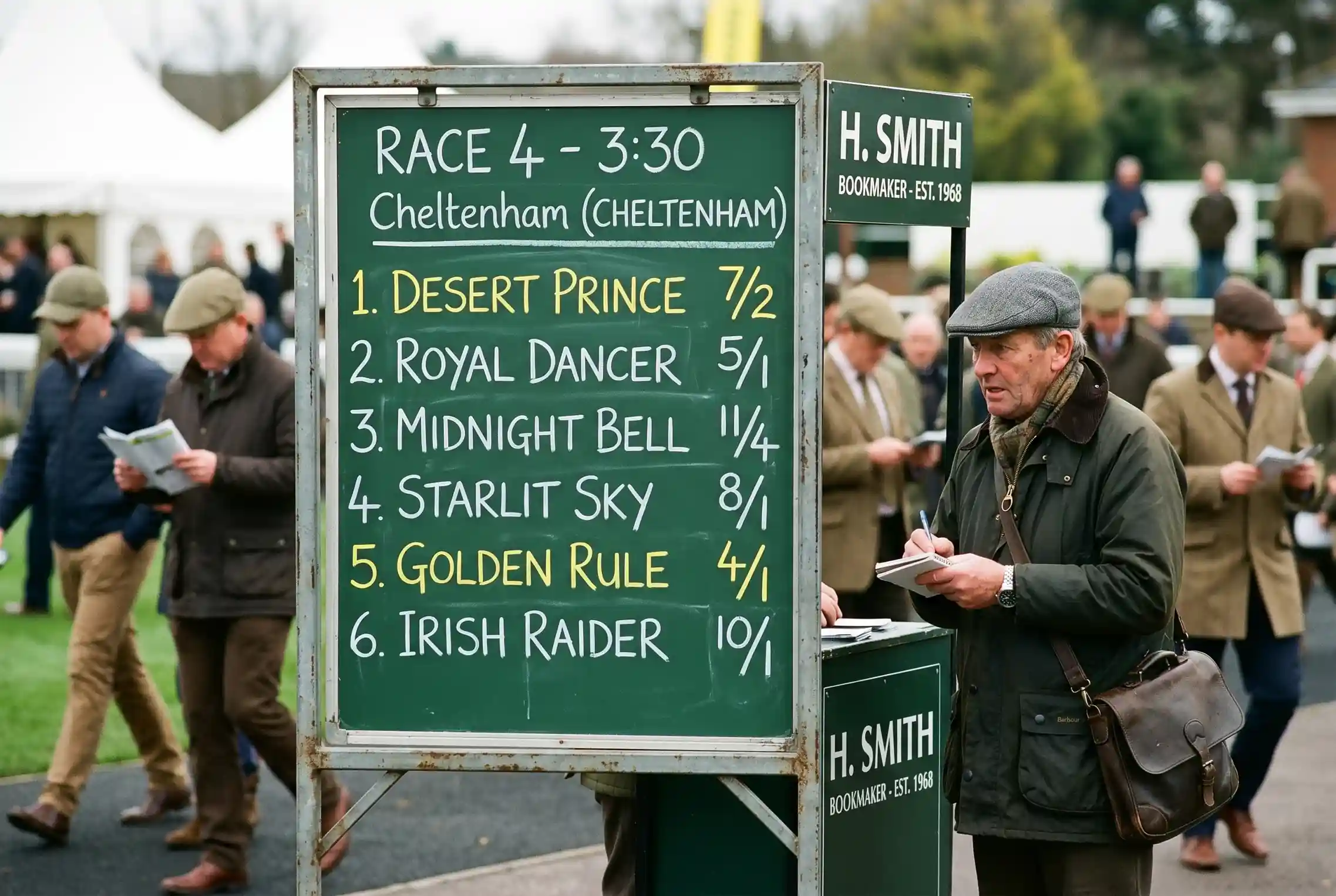
Value vs No Value — Side by Side
Your assessed probability: 30% (you believe the horse wins three in ten).
Fair odds for a 30% chance: 7/3 (decimal 3.33).
Bookmaker offers 4/1 (decimal 5.00): value bet — the market underestimates this horse.
Bookmaker offers 2/1 (decimal 3.00): no value — the market already prices in a higher chance than your assessment.
Most punters skip this step entirely. They look at the odds, decide whether they “seem good,” and bet accordingly. Odds-on favourites win 55–60% of the time on the flat, and horses priced at 1.25 or shorter convert at 86%. Those are impressive win rates, but backing them blindly still erodes your bank because the returns are so compressed that a small number of losers wipes out the profit from multiple winners. BHA data shows gross win has been improving even as turnover falls — results on the racecourse have been running in the bookmakers’ favour recently.
In small fields of six runners, the favourite wins around 40% of the time at an average price just above even money. In fields of twelve, that drops to approximately 27% at an average price of roughly 2/1. Field size changes the value equation dramatically — always factor it in.
Value betting is not about finding long shots or backing outsiders for the sake of a bigger price. It is about systematic disagreement with the market. When your form analysis, going assessment and connection filters lead you to a probability that differs meaningfully from the implied probability of the odds, you have a potential value bet. You will still lose many of these — a 40% proposition loses six times in ten — but over hundreds of bets, the positive expected value compounds. I explore the mechanics of identifying and exploiting value in the dedicated value betting guide.
Building a Betting Strategy That Survives Contact with Reality
I had my best-ever month in March 2022 — a 23% ROI across forty-seven bets at the Cheltenham Festival. The following month, I tripled my stakes. By mid-April, I had given back every penny of profit and then some. The strategy that produced the profit was sound; the staking that followed was reckless. That is the distinction most punters never make — they conflate a good selection method with a good betting strategy, when the two are separate disciplines that must work together.
BHA data underlines the challenge. Total betting turnover on British racing dropped by 9% in early 2025 compared with the previous year, a decline that Richard Wayman, BHA’s Director of Racing, attributed to a wide range of factors beyond just the product itself. When even the overall market is contracting, disciplined staking is not optional — it is survival.
Do
- Define your staking plan before the season starts and stick to it through cold streaks
- Keep a detailed record of every bet — date, race, selection, odds, stake, result, rationale
- Review your results monthly with a focus on process (was the bet justified?) rather than outcome (did it win?)
- Specialise — whether by race type, course, trainer or distance, depth of knowledge beats breadth
Don’t
- Increase stakes after a winning run or chase losses after a losing one
- Bet on every race at a meeting — selectivity is the edge
- Treat tips from newspapers or social media as finished analysis
- Conflate entertainment bets (accas, novelty markets) with your core strategy
The systematic backing of favourites returns around 93p for every £1 staked — that minus 7% ROI is the benchmark against which every strategy must be measured. If your approach cannot beat that number over a meaningful sample of at least two hundred bets, you do not yet have an edge; you have an opinion with a stake attached. The detailed mechanics of constructing and stress-testing a complete horse racing betting strategy deserve their own deep analysis, but the foundations start here.
A betting strategy is only as strong as the staking discipline that supports it. The best selection method in the world will lose money if paired with erratic, emotionally driven stake sizing.
Bankroll Essentials: Flat Staking vs Percentage Staking
Two staking methods dominate serious horse racing betting, and both have legitimate arguments in their favour. Flat staking means you bet the same absolute amount on every selection — say £10, regardless of confidence level or odds. Percentage staking means you bet a fixed percentage of your current bankroll — typically 1–2% per bet — so your stakes rise when you are winning and fall when you are losing.
Flat Staking vs Percentage Staking Over a Losing Run
Starting bankroll: £1,000. Ten consecutive losers.
Flat staking at £20 per bet: bankroll drops to £800 (20% loss). Your fixed stake is now 2.5% of your actual bank — slightly overexposed.
Percentage staking at 2% per bet: each stake shrinks automatically. After 10 losses, bankroll sits at approximately £817 (18.3% loss). The stake has self-corrected downward to protect the remaining bank.
A losing run of 10–15 bets is not unusual in horse racing, even with a positive long-term edge. If your staking plan cannot survive that drought without crippling your bankroll, it will fail in practice regardless of how good your selections are.
I use a hybrid: percentage staking at 1.5% of bankroll for standard selections, with a cap preventing any single bet from exceeding 2.5% even when the bankroll grows. This keeps me disciplined during winning streaks and protects me during dry spells. The critical principle is that your staking method must be decided in advance and followed mechanically. The moment you adjust stakes based on how you feel about a particular horse, you have abandoned strategy for impulse.
Seasonal Rhythms: Flat, National Hunt and When to Bet More
British racing has a rhythm that casual punters ignore and professionals exploit. The flat season runs primarily from April through October, peaking around Royal Ascot in June. National Hunt dominates from October through April, with the Cheltenham Festival in March representing the single biggest betting event of the year. All-weather racing fills the calendar year-round, but the concentration of quality follows a distinct seasonal curve.
Horse racing betting participation in the UK swings from 7% of the adult population during the spring festival window to just 4% in the autumn lull — a seasonal shift that changes market dynamics, liquidity and the quality of available odds.
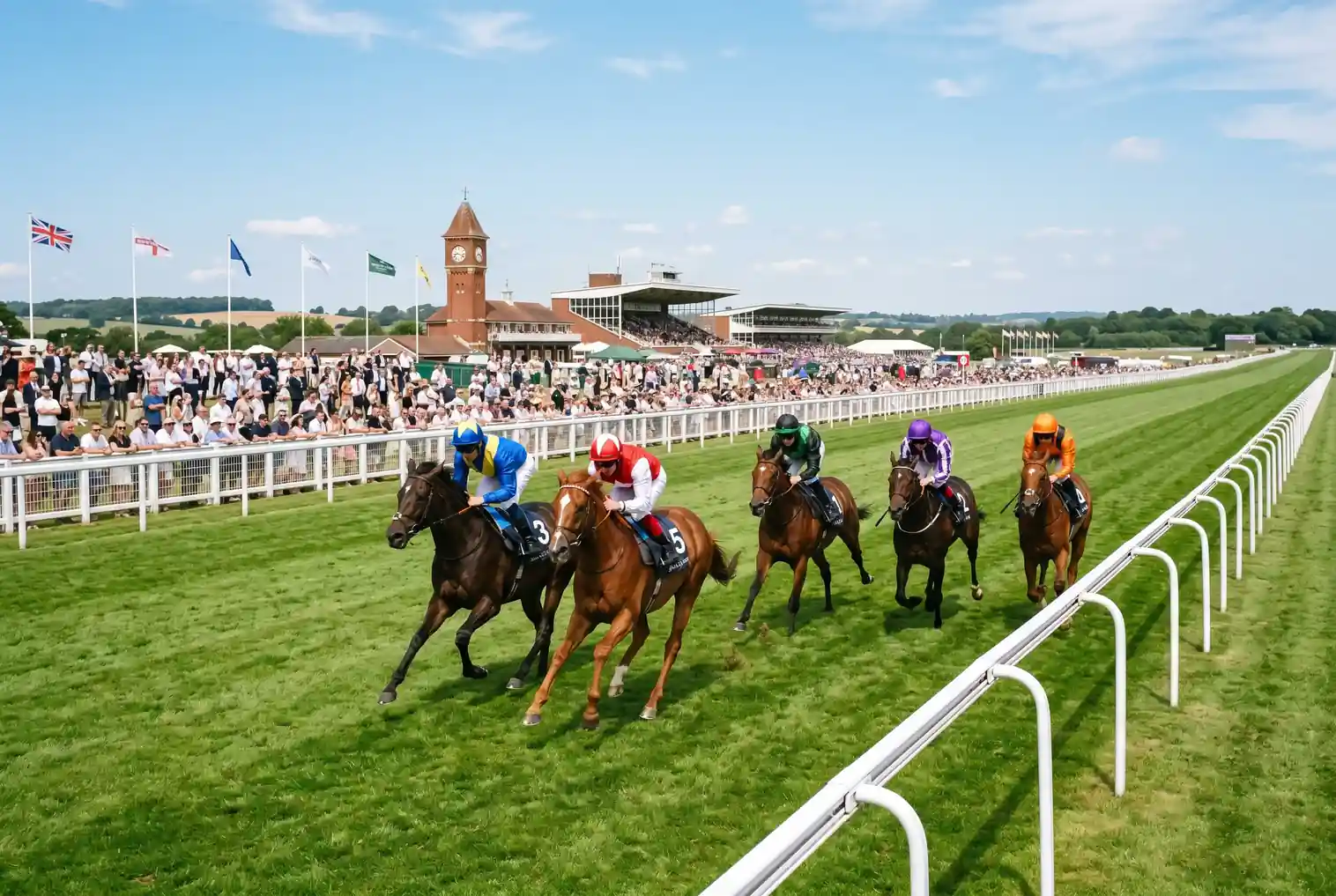
Average turnover on Core Fixtures — the bread-and-butter midweek and Saturday meetings — dropped 8.6% in 2025 compared with 2024, while turnover on Premier Fixtures actually rose 2.7%. The money is concentrating around the big days. For a punter, this means the best value often sits in the less glamorous fixtures where bookmakers are pricing up races with less data and less public attention. A Tuesday card at Catterick or a Wednesday evening at Chelmsford does not attract the same analytical scrutiny from the market that a Saturday at Newbury does — and that is exactly where knowledgeable form readers can find edges that would not exist in a more liquid, more efficient market.
What Every UK Punter Needs to Know About Affordability Checks
Last autumn, a friend of mine — a professional punter with a fifteen-year track record — had his account frozen mid-festival because an affordability check flagged his deposit pattern. He was not a problem gambler. He was not in financial difficulty. He was a man who had staked within his means for over a decade and suddenly found himself locked out of his accounts while trying to back a horse he had spent three hours analysing. The check was resolved within 48 hours, but the damage was done — the horse won at 7/1, and he was on the sidelines watching.
Affordability checks are the single biggest regulatory shift affecting UK punters right now. The Gambling Commission lowered the threshold for light-touch financial assessments to £150 in net monthly losses from the original £500, effective February 2025. If your losses breach that level, your operator is required to conduct a financial risk check through a credit reference agency. The good news — and the Commission has been keen to emphasise this — is that 95% of the 530,000 checks conducted so far have been processed “frictionlessly,” meaning no contact with the customer and no disruption to the account.
The affordability check threshold dropped to £150 per month in net losses from February 2025, with 95% of checks processed without any customer contact.

A “frictionless” check means the operator queries your financial profile through a credit reference agency in the background, without you knowing it happened. Only if the check raises a concern — typically a mismatch between your spending pattern and your visible financial situation — does the operator need to make direct contact or impose restrictions.
The industry’s concern, however, runs deeper than individual inconvenience. Nevin Truesdale, The Jockey Club’s Chief Executive, has argued that the Commission’s direction risks reducing the market to small-stakes punters only, which he believes is not the right outcome. The Betting and Gaming Council estimates that 45,000 punters may migrate to unlicensed, unregulated operators as a result of the checks, taking an estimated £13.2 million in Betting Levy income with them. One in three punters staking £1,000 or more per transaction has already used an unregulated site in the past twelve months.
The BHA has projected that full implementation of affordability checks in their proposed form could cost the betting industry £900 million per year, British racing £250 million over five years, and the Treasury £300 million annually in reduced tax revenue. Whatever your view on the policy, the financial stakes for the sport are enormous.
Remote Gaming Duty rose from 21% to 40% in April 2026, though horse racing bets remain at the lower 15% rate. Enforcement against unregulated operators is intensifying too — between October 2024 and September 2025, the Gambling Commission issued 806 cease-and-desist letters and 314 illegal gambling sites were geo-blocked.
For you as a punter, the practical implications are straightforward: keep your deposit and loss patterns consistent, use only licensed operators, and do not be alarmed if a background check occurs. If you are a higher-staking punter, be aware that enhanced checks may apply. The regulatory environment is evolving, and informed punters adapt rather than ignore the changes.
Seven Quick Wins: Instant Improvements to Your Betting Process
When I look back at my first five years of betting, a handful of simple changes would have saved me thousands of pounds. Not sophisticated changes — basic, structural improvements to the betting process itself. Here are seven that make the biggest difference.
1. Stop betting on every race. This is the single most impactful change a losing punter can make. A typical Saturday card might feature thirty-five races across five meetings. You do not have an informed view on thirty-five races. Nobody does. If your form analysis gives you a genuine opinion on four or five, bet those and watch the rest. Selectivity is not a sign of timidity — it is a sign that you understand where your edge exists and where it does not.
2. Record every bet in a spreadsheet. Date, course, selection, odds, stake, result, profit or loss, and a one-sentence note on your rationale. After fifty bets, patterns emerge that are invisible in real time — you might discover your all-weather selections outperform your turf picks, or that your handicap strike rate is half your novice-race rate.
3. Check the going report within an hour of the race. Ground conditions in the UK change with the weather, and a rail movement announced at 11am can invalidate an assessment you made the previous evening.
4. Compare odds across at least three operators before placing a bet. The difference between 7/2 and 4/1 on the same horse is a 14.3% improvement on your return. Over a year of betting, consistently taking the best available price adds several percentage points to your ROI.
Do
- Limit yourself to races where your analysis gives a clear, defensible view
- Treat your betting record as a performance review, not a ledger
- Verify going and non-runner information as close to race time as possible
- Shop for the best price as a non-negotiable habit
Don’t
- Bet to “make the afternoon interesting” — that is entertainment, not strategy
- Trust your memory over your records — cognitive bias flatters your recall
- Assume yesterday’s going report applies today
- Accept the first price you see out of convenience
5. Separate entertainment bets from strategic bets — physically and mentally. If you want a fun accumulator on Grand National day, do it with a fixed, separate budget you have already written off. Your serious bankroll should never fund recreational punts. The moment the lines blur, your record-keeping becomes unreliable and your P&L stops telling the truth.
6. Focus on one area until you own it. The punter who knows everything about two-year-old maiden races on the flat has a bigger edge than the punter who knows a little about everything. Specialisation allows you to spot patterns that generalists miss — a debut runner from a yard that rarely sends out ready-made juveniles suddenly showing up with a top jockey is a signal that screams louder when you have watched that yard’s fifty previous debut runners.
7. Review losing bets more carefully than winners. A winning bet placed for the wrong reasons teaches you nothing. The bets that demand scrutiny are the losses where the process broke down: you ignored the going, you backed a horse without checking why it was dropping in class, you staked more than your plan allowed. Fix those, and the results follow.
If the systematic backing of favourites produces a -7% ROI, then every percentage point of improvement you make through better process moves you closer to breakeven — and potentially past it. The gap between -7% and +3% is not talent; it is discipline applied consistently over hundreds of bets.
Frequently Asked Questions
How often does the favourite actually win in UK horse racing?
Favourites win approximately 30–35% of all races in Britain. In small fields of five or six runners, the figure rises to about 40%; in large-field handicaps with twelve or more runners, it drops to around 27%. Odds-on favourites convert at 55–60% on the flat. However, backing every favourite systematically produces a return of only about 93p per £1 staked, so a high win rate alone does not guarantee profit.
What is each-way betting and when is it worth using?
An each-way bet is two separate bets: a win bet and a place bet at a fraction of the win odds. In most UK races with eight or more runners, the place terms pay the first three at one-quarter of the win odds. Each-way is most effective in large-field handicaps where the place terms extend to four places and the odds are long enough to make the place portion profitable on its own.
How do fractional odds work in British horse racing?
Fractional odds express your profit relative to your stake. At 5/1, you profit £5 for every £1 staked. To calculate the implied probability, divide the right-hand number by the sum of both numbers: for 5/1, that is 1 divided by 6, or 16.7%. The implied probabilities across all runners always add up to more than 100% because of the bookmaker’s built-in overround margin.
What is the single best betting strategy for a beginner punter?
Start with win singles on short-field races where the form is easier to analyse. Set a fixed bankroll, stake 1–2% per bet, and record every wager. Focus on learning to read form and assess the going before adding complexity. The best beginner strategy is not a secret system — it is a disciplined process that allows you to learn from results and improve incrementally.
How much of my bankroll should I stake on a single bet?
The accepted range is 1–2% of your total bankroll per bet. At 1%, a £500 bank means a £5 stake per selection. This feels small until you experience a losing run of ten or fifteen bets and realise that 1% staking means you have lost only 10–15% rather than half your bank. Percentage staking, where the actual pound amount adjusts as your bank changes, provides an automatic safety mechanism.
Is it possible to make a long-term profit from horse racing betting?
Yes, but the proportion who achieve it is very small. The market’s overround means the default outcome is a steady loss of around 5–10% of turnover. Consistent profitability requires superior form analysis, value identification and disciplined staking maintained over hundreds of bets. Most successful punters specialise in a niche area and treat betting as a skill-based activity rather than a recreational gamble.
What are affordability checks and will they affect my betting?
Affordability checks are financial risk assessments that licensed UK operators must conduct when net losses exceed certain thresholds — currently £150 per month for a light-touch check since February 2025. The vast majority (95%) are processed in the background through credit reference agencies without disruption. Higher-staking punters are more likely to encounter enhanced checks, and keeping consistent betting patterns reduces the chance of friction.
Created by the ”Tips for Horse Racing Betting” editorial team.